

Service
Positive Behaviour Support (PBS) Model
Positive Behaviour Support (PBS) Model
What is Positive Behaviour Support?
Positive Behaviour Support (PBS) is a person-centred, evidence-based approach used to understand and address challenging behaviours. It focuses on improving a person’s quality of life and teaching new skills, rather than simply suppressing unwanted behaviours.
PBS is a framework for developing an understanding of why a person might be engaging in challenging behaviour. It then uses this understanding to create proactive strategies and teach new skills to improve well-being and participation in life.
Key Principles of PBS
Person-Centred
Focuses on the individual's needs, preferences, and goals.
Proactive
Aims to prevent challenging behaviours by addressing their root causes.
Function-Based
Seeks to understand the "why" behind behaviour.
Skill-Building
Teaches new, more appropriate ways for individuals to meet their needs.
Ecological
Considers the environment and how it impacts behaviour.
Collaborative
Involves the individual, family, carers, and professionals working together.
Evidence-Based
Relies on research and data to inform strategies and ensure effectiveness.
What is Positive Behaviour Support?
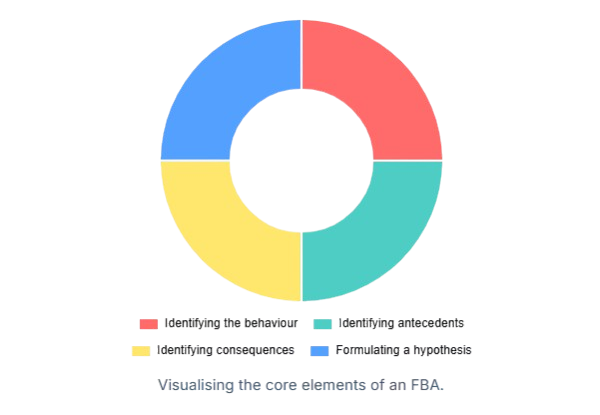
1. Functional Behaviour Assessment (FBA)
Functional behaviour assessment is the cornerstone of PBS, helping to understand the purpose behind a behaviour. It typically involves:
- Identifying the behaviour: This involves clearly defining the challenging behaviour.
- Identifying antecedents: This includes examining what happened prior to the behaviour (i.e., the triggers).
- Identifying consequences: This requires analysing what occurred following the behaviour (i.e., the reinforcers).
- Formulating a hypothesis: This involves considering what the likely function of the behaviour was.
2. Proactive Strategies
These are preventative measures designed to make challenging behaviour unnecessary by addressing its triggers and functions:
- Environmental modifications: Change the setting to reduce triggers (e.g., noise levels, visual clutter).
- Curriculum adaptations: Adjust tasks or expectations to match abilities and interests.
- Relationship building: Strengthen positive connections and rapport.
- Choice and control: Increase opportunities for autonomy and decision-making.
- Clear expectations & routines: Provide predictability and structure.
3. Reactive Strategies
These are planned responses for when challenging behaviour does occur, focusing on safety and de-escalation:
- De-escalation techniques: Ways to respond safely and calmly.
- Safety plans: Procedures to ensure the safety of everyone involved.
- Minimising reinforcement: Avoid accidentally rewarding the challenging behaviour.
- Crisis intervention procedures: For severe instances, ensuring a safe and therapeutic response.
4. Skill Development
Teaching new, appropriate skills is crucial for long-term change, enabling individuals to meet their needs constructively:
- Replacement behaviours: Teach new ways to achieve the same function as the challenging behaviour.
- Communication skills: Help individuals express their needs, wants, and feelings effectively.
- Coping skills: Teach strategies for managing emotions or difficult situations.
- Social skills: Develop abilities to interact positively with others.
- Self-regulation skills: Help individuals manage their own behaviour and responses.
5. Monitoring and Evaluation
Continuous monitoring ensures the PBS plan is effective and responsive to the individual’s changing needs. This involves:
- Data collection: Track the frequency, intensity, and duration of behaviours.
- Regular review: Adjust the plan based on data and ongoing needs.
- Celebrate progress: Acknowledge and reinforce positive changes.
What is Positive Behaviour Support?
Improved Quality of Life
For the individual and those around them, enhancing well-being
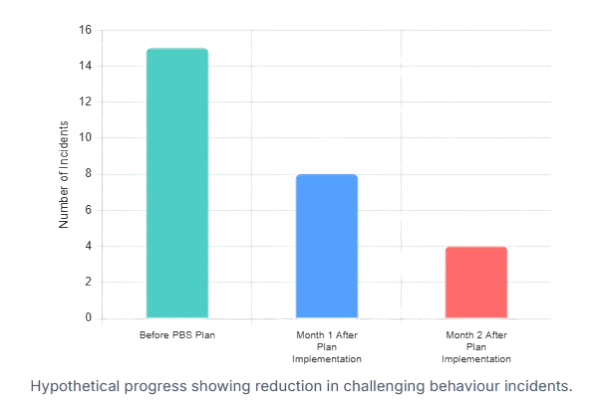
Reduced Challenging Behaviours
Leading to safer and more positive environments for everyone.
Increased Independence
Through the development of new functional and adaptive skills.
Enhanced Relationships
Fostering understanding, trust, and positive interactions.
Greater Inclusion
Enabling participation in community, school, and daily activities
Sustainable Change
Focuses on long-term solutions by addressing underlying causes.
PBS in Action: A Cycle of Support
Positive Behaviour Support is an ongoing, cyclical process. Each step informs the next, creating a continuous loop of assessment, planning, action, and refinement to best support the individual.
1. Assess Behaviour & Function -
This initial phase involves collecting comprehensive information to understand the challenging behaviour, including its triggers (antecedents) and what happens afterwards (consequences), to determine its underlying purpose or 'function'.
2. Develop PBS Plan -
Based on the assessment, a tailored PBS plan is created. This plan outlines proactive strategies to prevent behaviours, reactive strategies for safe responses, and identifies new skills to be taught.
3. Implement Strategies -
The developed strategies are put into action consistently across all relevant environments and by all support persons. This requires training and ongoing support for those implementing the plan.
4. Monitor & Collect Data -
Systematic data collection is crucial to track the effectiveness of the plan. This involves recording occurrences of challenging behaviours and the use of new skills, allowing for objective evaluation.
5. Review & Adjust Plan -
Regularly review the collected data and the individual's progress. The plan is a living document, and adjustments are made as needed to ensure it remains effective, person-centred, and promotes continuous positive change.
PBS in Action: A Cycle of Support
Positive Behaviour Support is an ongoing, cyclical process. Each step informs the next, creating a continuous loop of assessment, planning, action, and refinement to best support the individual.